I've been following the retrocomputing scene since I got my first Internet connection in 1999, but I suddenly lost interest in it after an avalanche of automatic decompilations of classic videogames, unsolicited ports to systems nobody asked for, and a massive amount of soulless AI-coded videogames. I'm tired of AI slop, but I suddenly felt curious: is AI really so good now that it can program assembly for ancient systems it was probably not trained for?
To answer this question, I ran an experiment. I gave both Claude and Codex a one-shot prompt, with no suggestions and no further refinement from my side:
Make me an MSX2 game like Space Invaders. With a cool PSG chiptune and smooth vertical scrolling. And multicolor sprites. And a final boss. I've installed the z80asm assembler for you. Make it compile into ROM format.
The original prompt was in Spanish, in case the language affects the model's reasoning cost.
My first surprise was that both Claude and Codex searched my system for an OpenMSX emulator installation and used it for live debugging. I stood open-mouthed, watching how they ran the compiled artifacts and used the emulator's debugging capabilities to modify memory at runtime and test the gameplay. They took screenshots and recorded the output sound to verify that everything was behaving as expected.
The time and cost of the final videogame varied across the different AI models. The next sections describe each version produced from the same prompt, ordered from the one that, in my opinion, had the worst result to the one that delivered the most polished experience. The following table summarizes them.
| Model | Effort | Time to code | Cost | Resulting ROM |
|---|---|---|---|---|
| GPT 6.1 Sol | medium | 12 minutes | $0.60 | Play online |
| GPT 6 Astra | medium | 8 minutes | $3 | Play online |
| Claude Sonnet 5.5 | medium | 60 minutes | $8.50 | Play online |
| Claude Opus 5.5 | medium | 28 minutes | $6 | Play online |
GPT 6.1 SOL (medium effort)
After 12 minutes, with a calculated cost of $0.60, GPT 6.1 Sol delivered a very basic yet functional videogame.
As you can see below, the intro screen is just basic terminal-like text, the in-game graphics are simple, and the music is basic and repetitive. As for gameplay, it consists of three waves of enemies with increasing difficulty (bullets are initially vertical but later can also travel diagonally), plus a basic final boss.
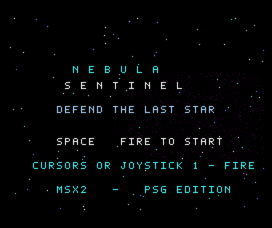
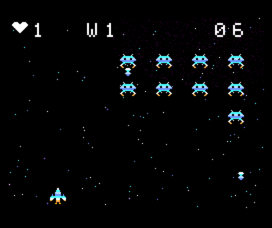
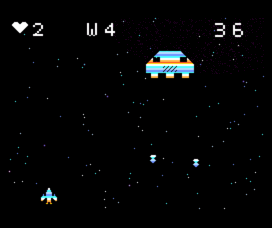
There are a few aspects to polish. For example, some enemies disappear because of the Yamaha V9938 limits on sprites per scanline and on the whole screen.
Even so, this could have been one of those cheap videogames that old European paper magazines used to give away on cassette tapes.
GPT 6 Astra (medium effort)
I tried the same prompt with OpenAI's supposed flagship model. The time dropped to 8 minutes, but the cost rose to $3.
Despite being 5 times more expensive, it shows no noticeable qualitative improvement: simple graphics, basic and repetitive music, and similar playability.
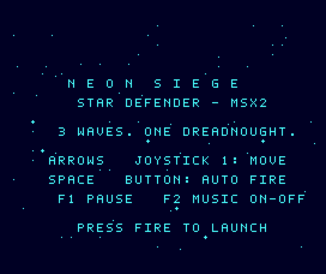
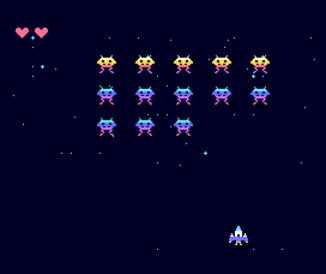
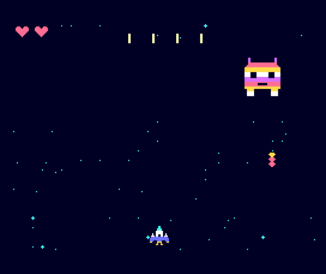
The sprite flickering is gone, but now there is a dark horizontal stripe without stars.
Claude Sonnet 5.5 (medium effort)
Claude Sonnet 5.5 took 1 hour to develop the videogame, at a reported cost of $8.50.
But oh boy! The result is way more polished: the music is really cool, with different tracks for different moments (intro, in-game, boss, game over...). The intro screen uses graphics, with plenty of movement and eye-catching details here and there.
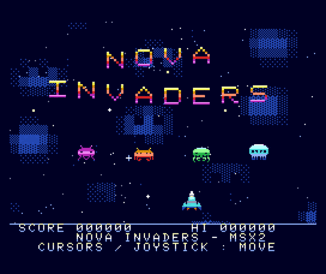
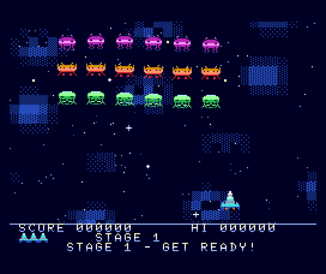
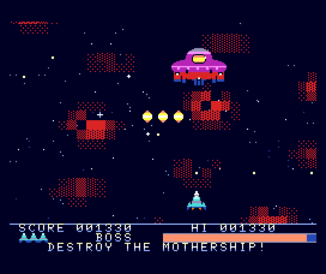
Special mention goes to the static scoreboard at the bottom of the screen while the background scrolls vertically. Since the MSX video chip has only one background plane, this requires precisely synchronizing the vertical scroll register of the Yamaha V9938 with the raster position of the screen (changing the register at the right scanline). That detail shows a certain mastery of the MSX2 hardware.
Claude Opus 5.5 (medium)
With Opus, the development time went down to 28 minutes and, surprisingly, the cost was also lower: $6. My hypothesis is that Opus reached a working solution faster, while Sonnet had to spend more time and resources debugging its own code.
The result is arguably the most polished game, with great graphics and great music. I hate to admit that it has some details that could have made me believe it was made by a human, and even that the human put some love into the job.
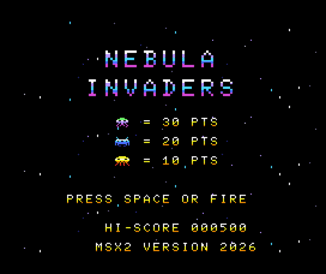
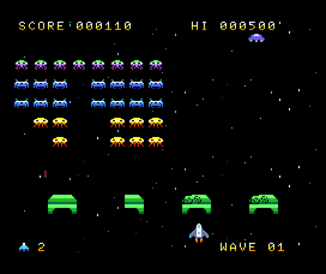
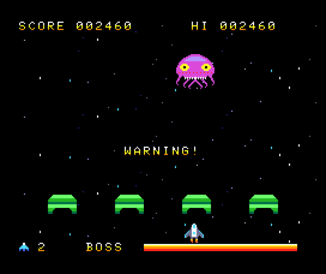
Another great detail is that the star field simulates parallax scrolling by redrawing the columns of stars separately. Although the MSX hardware has no parallax support (single background plane), the result is really fluid and eye-catching.
This game could perfectly well have been one of those mini-games shipped with the Japanese disk magazines of the 1980s and early 1990s.
Some thoughts
AI has become too tempting not to use it to boost your visibility and status within code communities, like the retrocomputing ones.
However, there is no merit in it beyond writing a prompt and paying for the tokens. I ✌️developed✌️ 4 games in an afternoon and they are now public, contributing to the stampede of noise that is burying the truly meritorious productions that a few developers are crafting.
Personal opinions aside, Anthropic models proved to be one generation ahead of OpenAI's. But I'm sure Codex is still useful if you provide more guidance and accompany the agent during a more interactive development process, especially because GPT models cost a fraction of what Anthropic models do.
Where is the code of the released games? I usually share the code used in my blog posts, but in this case it's just AI slop and I don't think it's worth keeping. The results of this blog post demonstrate that code is becoming disposable.